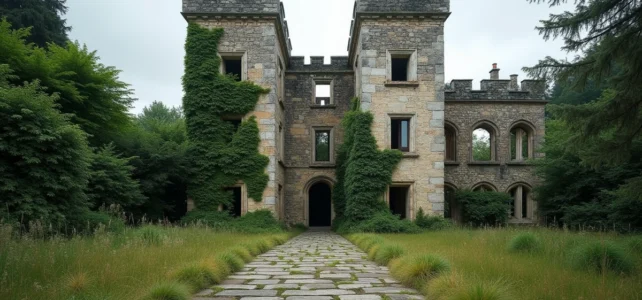
Any real estate transfer at a symbolic price, including for an abandoned castle, must be formalized by a notary under penalty of nullity of the deed. This point, often overlooked in online advertisements, conditions the entire arrangement. Acquiring an abandoned castle to give away for 1 euro requires understanding the applicable tax regime, the resolutory clauses imposed by the transferor, and the actual renovation budget, which systematically exceeds that of a typical purchase in a rural area.
Tax regime for a 1 euro transfer: transfer duties and market value
Transfer duties are not calculated based on the transfer price, but on the market value estimated by the land registry. A castle transferred for a symbolic 1 euro may be valued at several hundred thousand euros by the tax administration, which generates transfer duties proportional to this estimate.
We observe that this distinction between transfer price and tax base surprises the majority of candidates. The notary is required to settle the duties based on the land registry evaluation, not on the price agreed upon by the parties.
For those considering the acquisition of a castle abandoned to give away for 1 euro, it is important to anticipate that notary fees, property publicity taxes, and real estate security contributions add to the transfer duties. The total notarial costs represent a significant amount even before the first shovel hits the ground.
When the transfer is classified as a donation (which is common when the transferor is a local authority or public organization), the transfer duties for gratuitous transfers apply according to the current scale. Family allowances obviously do not apply between a municipality and a private buyer.

Resolutory clauses and commitments imposed by transferring authorities
The resolutory clause is the central lever for the transferor. In almost all transfer deeds at 1 euro carried out by municipalities or public establishments, the buyer commits to a work program accompanied by a binding schedule. Failure to comply with this schedule results in the automatic resolution of the sale, without compensation for any sums already invested.
These clauses generally provide for:
- A minimum renovation budget set in the deed, often calculated based on a quote validated by a heritage architect or a Buildings of France architect when the property is classified or registered
- A deadline for the completion of the works (rarely less than three years, sometimes extended to five years for the most degraded properties)
- A destination obligation: the castle must be allocated for a specific use (main residence, tourist accommodation, cultural activity) for a minimum duration after the works
- A convention signed with the Ministry of Culture when the property falls under the regime of historical monuments
The mechanism is simple: the community transfers an asset that it can no longer maintain but retains a right of recovery if the buyer fails to fulfill their obligations. The buyer therefore bears the total financial risk without any guarantee of preserving the property.
Financial profile required by transferors
Municipalities do not transfer to just any candidate. We recommend preparing a file that includes a detailed financing plan, a bank certificate of borrowing capacity, and, if applicable, a principle agreement for a renovation loan. Some authorities require a prior heritage audit conducted by a certified professional.
Actual renovation budget for a castle acquired for 1 euro
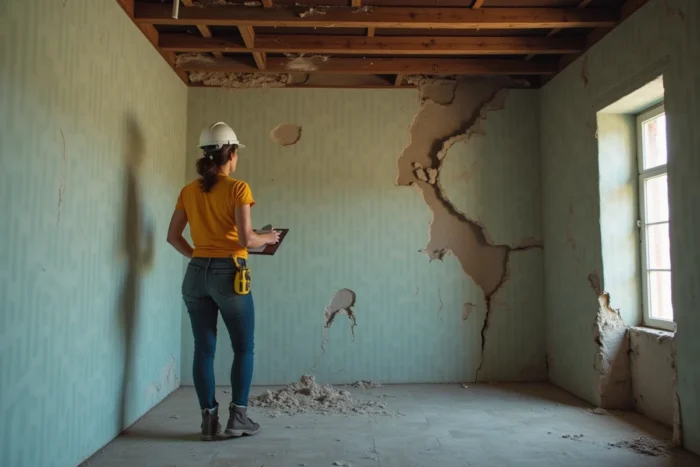
The symbolic price conceals a heavy financial commitment. A castle abandoned for several decades systematically presents structural issues: sagging roof, infiltrated masonry, non-existent or substandard networks. The cost of renovation far exceeds that of a new construction of equivalent size.
The main cost items are as follows:
- Weatherproofing (roofing, exterior joinery, drainage): a priority item and often the most expensive
- Structural repairs (foundations, load-bearing walls, floors): requires the intervention of a specialized office for old buildings
- Networks (electricity, plumbing, sanitation): complete creation in most cases
- Restoration of heritage elements (woodwork, fireplaces, stone staircases): mandatory if the property is classified or registered, using materials and techniques imposed by the Buildings of France architects
For properties classified as historical monuments, the works must comply with the prescriptions of the DRAC. This technical constraint increases the unit cost of each intervention but opens access to public subsidies.
Available aids for renovation
Some rural departments have increased their ceilings for renovation aid for private real estate, with an annual update indexed to inflation. The Destination France Plan mobilizes 1.9 billion euros for tourism, including 1.25 billion in Bpifrance and Banque des Territoires loans. The Tourism loans from Bpifrance finance the renovation and compliance of tourist accommodations without guarantees on assets or personal surety, which can apply to a castle converted into a guesthouse or bed and breakfast.
The tax exemption related to historical monuments allows for the full deduction of restoration works from overall income, without capping, provided that the property is classified and that the works are supervised by a chief architect of historical monuments.
Notarial formalization and validity of the transfer deed
Since the recent tightening of regulations, any transfer at a symbolic price must be formalized by a notary under penalty of nullity. A private deed is not sufficient, even between individuals. This requirement protects the buyer as much as it secures the transferor, since the notary verifies the mortgage situation, easements, and the absence of unresolved co-ownership.
Abandoned castles frequently present complex succession situations. A property without an identified owner or in co-ownership among dispersed heirs may require several months of genealogical research before any signature. The notary must also clear any potential mortgages and verify the absence of preemption by the municipality or department.
Acquiring a castle for 1 euro remains a viable arrangement provided one accepts the financial reality. The symbolic price is merely a gateway to a heritage renovation project whose total cost and legal constraints exceed those of a typical real estate purchase. We recommend conducting a complete audit of the building and assembling a solid financial file even before submitting an application to a transferring authority.