
A pair of socks that tightens after a wash that’s too hot or shrinks over the weeks, we all know the problem. Before throwing them away and buying new ones, a few simple actions can help enlarge socks that have become too tight and extend their lifespan. Here are seven concrete techniques, tested on different materials, to regain comfort without heading to the trash.
1. Warm soak with conditioner to relax the fibers
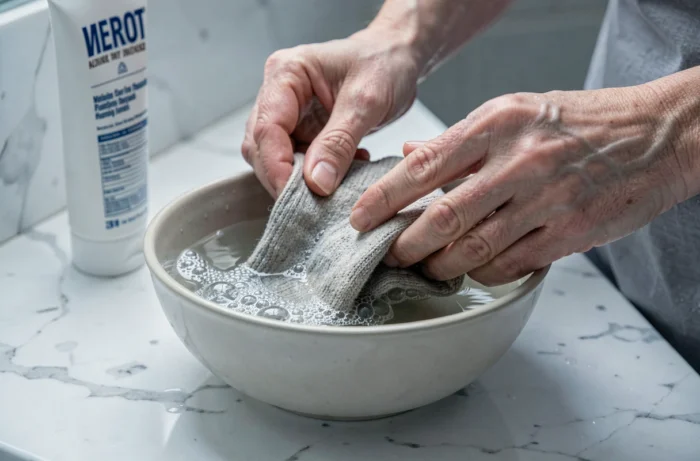
When a cotton or wool sock has shrunk, the first instinct is to soak it in a basin of warm water mixed with a dose of conditioner. The conditioner acts as a lubricant on the fibers: it releases the tension accumulated during washing and makes the fabric softer and more stretchable.
Let it soak for about twenty minutes, then gently wring it out without twisting. Next, put the still damp sock on an object wider than the foot (a bottle, a jar) to keep it stretched while air drying. Feedback varies on this point depending on the thickness of the knit, but the result is visible from the first attempt on natural fibers.
If you’re looking for more tips to extend the lifespan of socks, this method is a good starting point before moving on to more targeted techniques.
2. Manual stretching on a rigid form after moistening
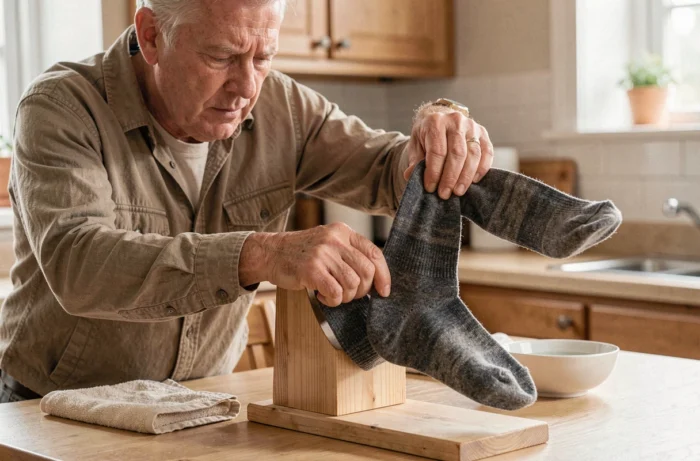
No need for a specific shoe tree. A rolling pin, a large can, or even a thick book wrapped in a plastic bag will do the trick. The idea is to maintain the sock under constant tension while it dries.
First, moisten the pair with warm water, wring it out without twisting, then put it on the chosen form while gently stretching the tightest area (often the foot or calf). Complete air drying fixes the new shape. For socks with very tight elastic, repeating the process two or three times yields a more durable result.
3. Washing at low temperature to prevent shrinking

The number one cause of shrinking is heat. A high-temperature cycle tightens cotton fibers and contracts elastane. To preserve the original size, always wash your socks in cold or low-temperature water.
The ISO 3758:2023 standard, updated in December 2023, specifies that care symbols on labels indicate the most aggressive treatment still allowed without irreversible damage, not the ideal washing method. Choosing a gentler setting than that indicated on the label (lower temperature, reduced spin) helps preserve elasticity and fibers well beyond the minimum recommendations.
- Turning socks inside out before putting them in the machine protects the outer surface from friction in the drum.
- Using a laundry bag reduces snags and prevents pairs from getting lost among the rest of the laundry.
- Opting for a mild detergent, without bleaching agents, avoids damaging elastic fibers.
4. Flat drying instead of using a dryer
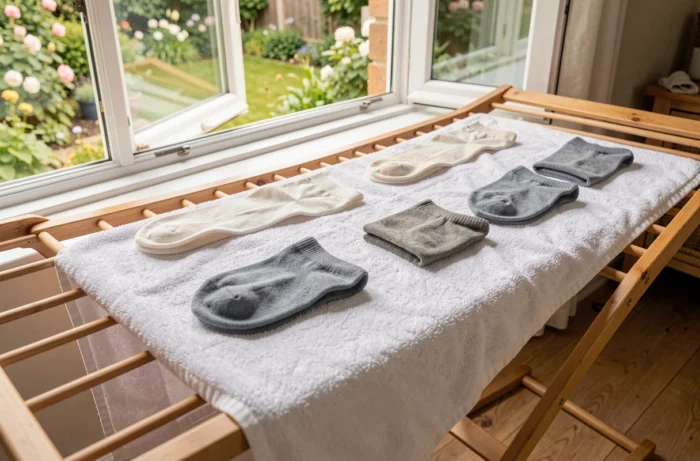
The dryer is the direct enemy of sock longevity. The heat from the drum degrades polyamide and elastane, two components responsible for support and elasticity. After a few cycles, the elastic at the top loosens, and the sock slips in the shoe.
Flat drying on a towel remains the most protective method. Lay the socks flat, reshape them with your hands, and let them dry away from any direct heat source. Hanging them on a line with clips distorts the opening, while flat drying maintains the original geometry.
5. Rotating pairs to distribute wear

Wearing the same pair three days in a row accelerates wear at friction points: heel, toe, elastic edge. Alternating between several pairs gives the fibers time to regain their shape between uses.
Aiming for a rotation of at least five to seven pairs for daily use. This simple act of rotation doubles the average lifespan of a pair without any additional investment, provided you store the socks flat or rolled without cramming them into each other (which stretches the elastic).
6. Regular toenail trimming to limit snags
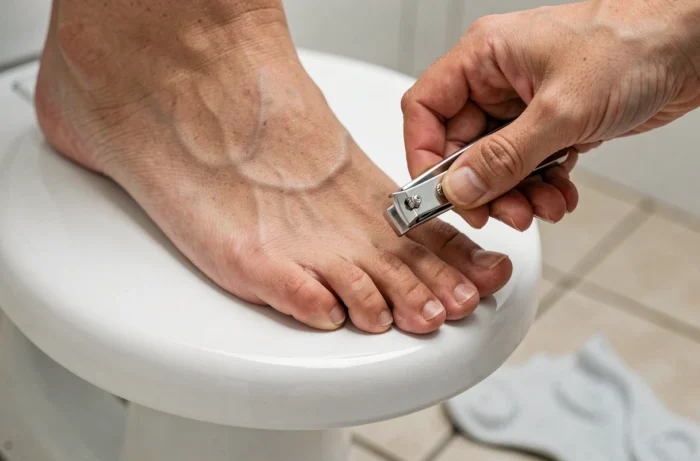
A toenail that is too long or poorly cut acts like a blade on the knit. The tip of the nail creates micro-perforations that enlarge over time with friction in the shoe. The result: a hole appears in just a few days at the toe.
Cut toenails straight, without rounding the corners (to avoid ingrown nails), and lightly file the edges to remove any roughness. This basic hygiene gesture is the primary cause of avoidable holes in socks. People who wear tight or pointed shoes are particularly affected, as the pressure presses the fabric against the nail.
7. Darning weakened areas before they break through
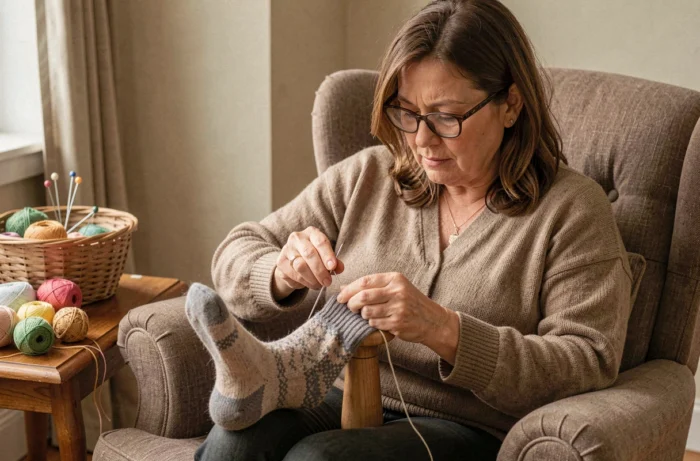
When the fabric starts to thin at the heel or toe without yet being pierced, it’s time to intervene. Darning a thin area takes just a few minutes with a needle and matching thread. Weave horizontal and then vertical passes over the weakened area to recreate a fabric.
The European eco-design regulation ESPR (2024/1781) is pushing textile manufacturers towards more repairable products. Darning socks fits into this logic: repairing before a hole appears costs less than replacing.
- Use thread of the same thickness as the original knit for a discreet and sturdy result.
- Stretch the sock over a darning egg or a tennis ball to work on a curved surface.
- Also reinforce the elastic edge that shows signs of loosening by re-sewing it with an elastic stitch.
A properly darned heel can last several months of daily use. The key is to act early: once the hole forms, the repair is less clean and holds less well in the shoe.