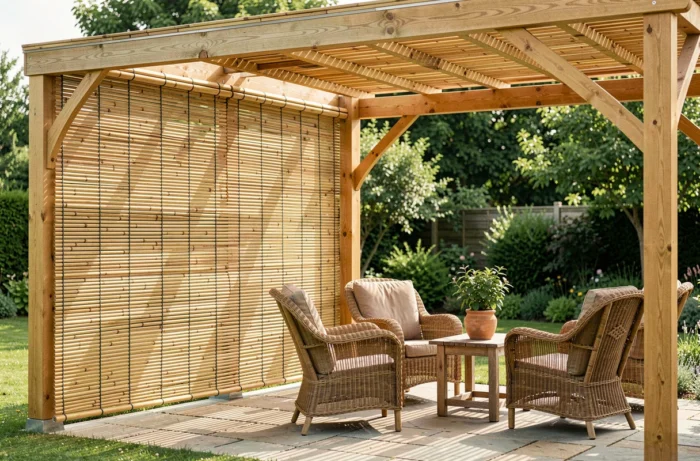
Bamboo screening is a panel made up of bamboo stalks assembled with galvanized wire, used as a slatted cover on a pergola to filter solar radiation. This plant material, valued for its raw appearance, has mechanical characteristics and maintenance constraints that deserve to be understood before installation.
Fire Reaction and Regulations: A Technical Point Often Ignored
Bamboo is a combustible material. Within the European framework, the requirements related to the fire reaction of construction products have tightened in recent years, including for external covering elements like screens.
Specifically, an untreated natural bamboo screen has a higher flammability than a fire-retardant polyester fabric or an aluminum slat. If your pergola is attached to the facade of your home, this parameter becomes particularly important: the spread of fire from the cover to the building becomes a real risk.
Before purchasing, check the product data sheet. Some manufacturers offer screens that have undergone flame-retardant treatment, but this option remains rare in the consumer market. For a pergola located near a barbecue or fire pit, caution dictates considering this factor from the choice of material.
Shading and Screening on Pergola: What Bamboo Really Does
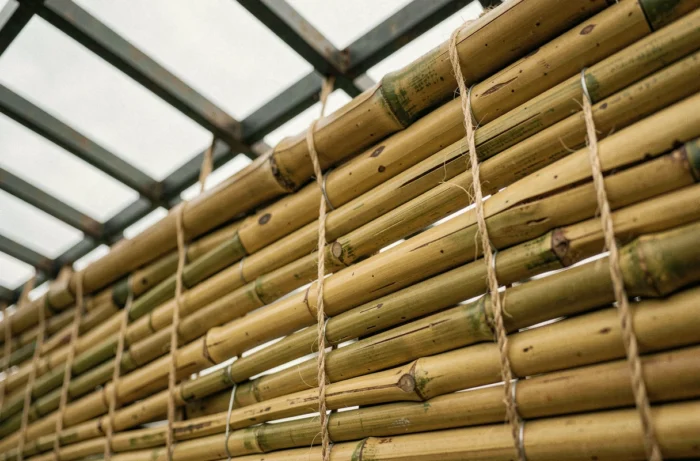
The primary function of a screen placed on a pergola roof is to create a shaded area. Bamboo effectively fulfills this role due to the diameter of its stalks, which block a significant portion of direct radiation. The level of screening depends on the spacing between the stalks: the closer they are, the denser the shade.
However, the bamboo screen does not provide protection against rain. Its slatted structure allows water to pass through, even in models with a high degree of screening. For those considering installing a bamboo screen for a pergola, this functional limitation should be established from the outset: it is a sunshade, not a waterproof roof.
This behavior in relation to water has a direct consequence on durability. Stagnant moisture accelerates the development of mold on the stalks, a common phenomenon in regions with high rainfall.
Durability of Bamboo Outdoors: Degradation Factors
Bamboo is a robust material when new, but its constant exposure to the elements leads to several forms of degradation that must be anticipated.
- The splitting of the stalks occurs due to repeated drying and humidification cycles. The canes split along the grain, which weakens the overall structure of the panel.
- Graying is inevitable without treatment: UV rays discolor bamboo within a few months, giving it a silvery then dull appearance.
- Mold and fungi settle on areas that remain damp after rain, particularly at points of contact with the pergola structure.
A treatment with linseed oil or a wood saturator can slow these processes, but it must be renewed annually. Without regular maintenance, the lifespan of a bamboo screen on a roof is limited to a few seasons. This is an unfavorable comparison against PVC screens or aluminum slats, which only require occasional cleaning.
Tax Impact and Urban Planning: Checks Before Installation
Installing a screen on a pergola may seem trivial, but the structure that supports it can have regulatory implications. In France, a pergola attached to the house may trigger urban planning formalities even for a modest area, while a standalone pergola follows different thresholds depending on the ground footprint and the Local Urban Plan.
The fiscal angle is even less known. A covered pergola that is permanently fixed to the building can be reclassified as an extension of the dwelling by the administration. In this case, it enters the calculation base for property tax. A removable structure generally remains in a different category, but the boundary depends on local assessment.
Before fixing anything, a check with your local urban planning department can avoid unpleasant surprises. It is not the screen itself that poses a problem, but the nature of the pergola on which it rests.
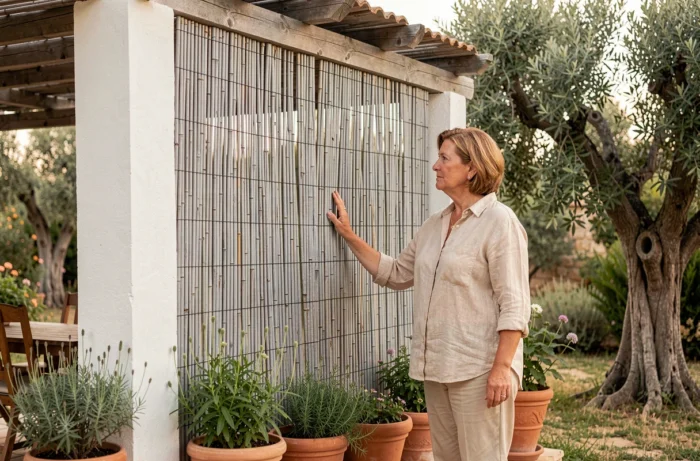
Bamboo, PVC, or Wicker Screen: Selection Criteria for a Pergola
Bamboo is not the only material available for covering a pergola. The choice depends on the intended use and maintenance tolerance.
- Natural bamboo offers the best aesthetic rendering for a plant-dominant exterior. It is suitable for pergolas used only in the beautiful season, in regions with low rainfall.
- The PVC screen replicates the appearance of bamboo without the maintenance constraints. It is resistant to moisture and UV rays, but its plastic appearance remains visible up close.
- Wicker and heather thatch provide a different texture, often with superior screening. Their lifespan outdoors remains comparable to that of untreated bamboo.
- Adjustable aluminum slats represent a higher investment, but they allow for modulation of shading and protection from rain, which no screen can do.
Bamboo stands out for its cost-to-purchase ratio and immediate visual appeal. In the long term, the cost of maintenance and periodic replacement reduces this initial advantage.
The choice of a bamboo screen for a pergola rests on a clear trade-off between natural aesthetics and practical constraints. For a permanent installation with low maintenance, other materials take precedence. For seasonal use where the charm of bamboo is paramount, the compromise remains acceptable, provided that regular renewal is integrated into the budget.