
The label “made in EEC” (European Economic Community) still appears on products that are circulating, reselling, or being collected. This inscription, inherited from a time when the European Economic Community was already setting rules of origin, raises a concrete question today: how to verify what this indication truly covers when manufacturing chains have profoundly changed since then?
Investigation-ready traceability: what the European framework now requires
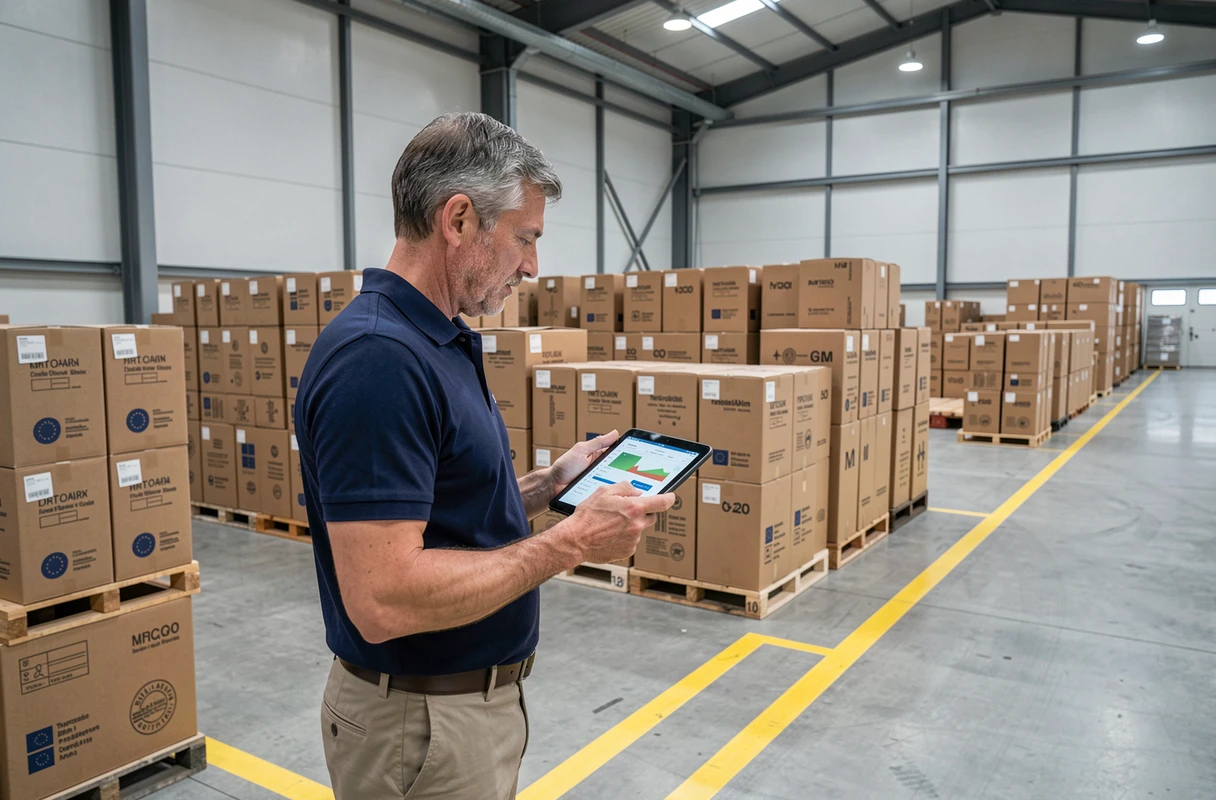
The European regulatory logic has evolved far beyond the simple origin label. In high-risk sectors, authorities now expect traceability described as “investigation-ready.” In practical terms, it is no longer sufficient to indicate the name of a supplier on a document.
Operators must be able to link a product to subcontracting levels, production sites, and the supply period, with the associated evidence. This requirement changes how companies document their supply chains, including for made in EEC products that continue to circulate in the market.
For the agri-food sector, the model remains based on the principle “one step back, one step forward”: each operator identifies their direct supplier and their direct customer, with records accessible to authorities. This system, already operational for years, constitutes the minimal traceability foundation in several European sectors.
Digital product passport: machine-readable traceability that goes beyond the label
The future digital product passport represents a significant shift in traceability requirements. The dedicated European register is already operational, and the obligations it carries will change how a product is identified throughout its life.
Several features distinguish this system from traditional traceability systems:
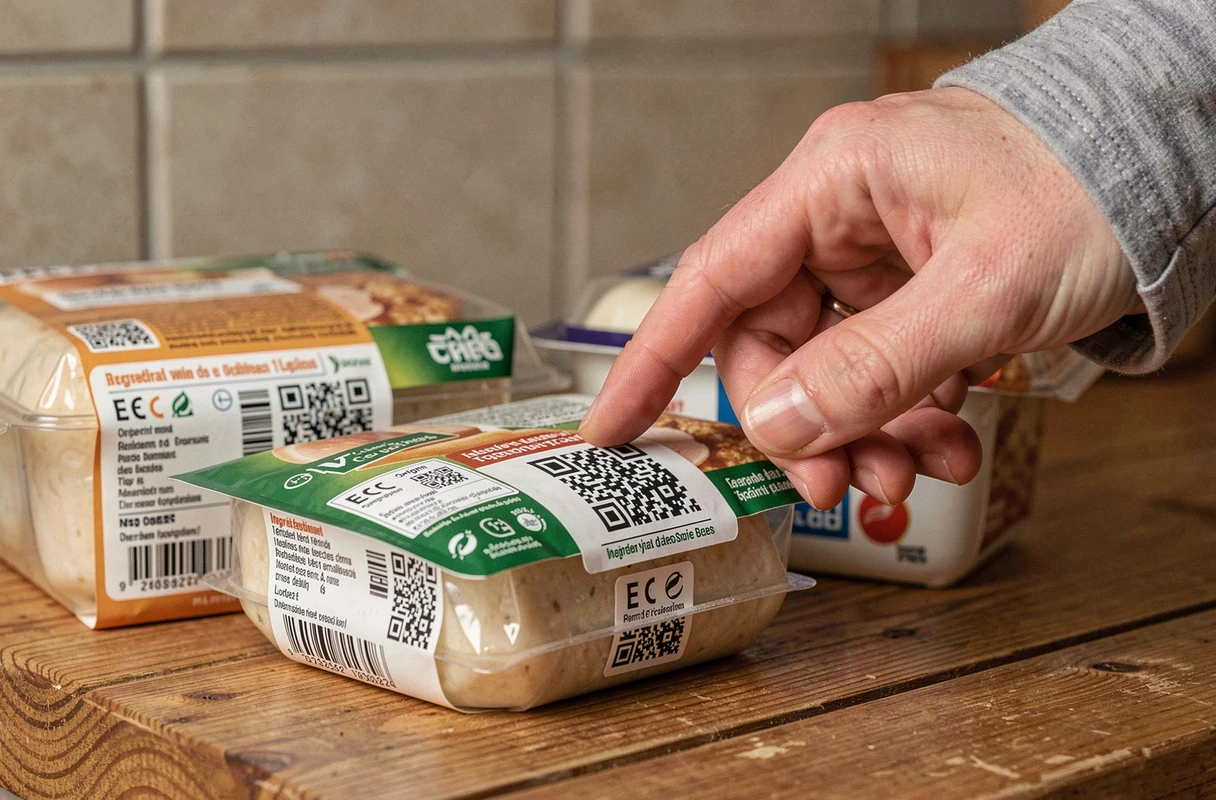
- Each affected product must carry a unique identifier, associated with a readable data medium (such as a QR code), rather than just a simple textual mention on the packaging.
- The data linked to this identifier (composition, origin, recyclability) must be kept accurate throughout the product’s lifespan, not just at the time of market entry.
- The format of the information must be structured and machine-readable, which requires manufacturers to shift from paper or PDF documentation to standardized data flows.
This framework does not only concern manufacturers based in Europe. Imported products are also targeted: any actor placing a relevant product on the EU market must provide the required data, regardless of the manufacturing country. A product labeled “made in EEC” and reintroduced into circulation (resale, second-hand market, collection) could therefore face documentation requirements it was never designed to meet.
Traceability of made in EEC products: the concrete limits on the ground
Applying these traceability standards to products manufactured decades ago raises practical difficulties that the regulation has not yet fully resolved.
The first relates to the documentation itself. Companies that manufactured under the EEC label did not necessarily keep detailed records beyond their fiscal and customs obligations of the time. Finding the exact production site, the subcontractors involved, or the precise composition of an old product often requires archival investigation.
The second limit concerns the continuity of the information chain. A product may have changed owners several times, crossed borders, or been repackaged. At each undocumented step, the traceability chain breaks. Field reports vary on this point: some sectors (vintage electronics, collectible toys) have developed community authentication practices, while others remain in almost total ambiguity.
What the origin label does not say
A “made in EEC” marking indicates a broad geographical area, not a single production site. At its peak, the European Economic Community included twelve member countries with varied industrial standards. Without additional traceability, this label does not allow distinguishing a product made in a factory with strict standards from another assembled from components of multiple origins.
This gap is precisely what the new European requirements seek to bridge. The digital passport aims to make each product “readable” independently, regardless of the goodwill or memory of intermediaries.
Traceability standards and trust: what is at stake for European sectors
Traceability is not just an exercise in administrative compliance. It conditions a sector’s ability to prove what it claims. For products claimed to be made in Europe, the stakes are direct: without a robust traceability system, the origin label loses its value as a quality signal.
The available data do not yet allow measuring the precise economic impact of the digital passport on the sectors of old products. However, the direction is clear: structured traceability is becoming a prerequisite for accessing the European market, not an optional competitive advantage.
Companies that anticipate these obligations, by structuring their product data now and documenting their supply chains in an exploitable way, are better positioned than those waiting for sector-specific implementing decrees. For actors working with historical products labeled EEC, the question is no longer whether traceability will be required, but how to reconstruct an information chain for products that were never designed to provide it.