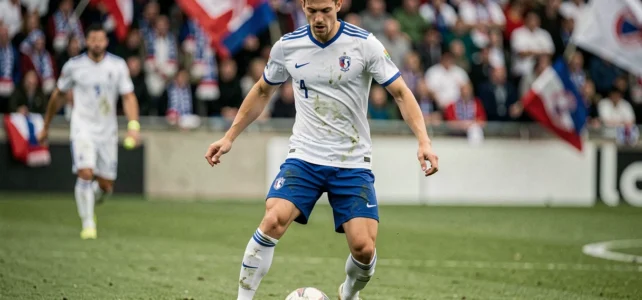
When a supporter watches a Ligue 2 match and then switches to Ligue 1, they are changing sports. No rhythm, no tactics, but different rules. Video assistance for refereeing, sound amplification of decisions, financial control of clubs: everything diverges from one division to another. Following the news of French football means accepting to navigate between competitions that do not operate under the same regulatory framework, even though they all wear the same tricolor jersey.
VAR absent in Ligue 2: a refereeing fracture at the heart of French football
Ligue 1 is expanding the scope of VAR for the 2026-2027 season. Referees can now use video for additional cases: corner errors, second yellow cards, identity errors on cards. The system is being strengthened, clarified, and gaining coverage.
In Ligue 2, none of this exists. Ligue 2 remains without VAR in 2026, and no deployment schedule has been communicated. Second division clubs play without video support, with the consequences this entails on results, promotions, and relegations.
The paradox deepens when looking one level lower. Ligue 3 is transitioning this season to a lighter system called Football Video Support. A less cumbersome system than Ligue 1’s VAR, but still offers a layer of video control to referees. Result: the third division has a tool that the second does not.
One can understand the logistical and budgetary constraints. Not all Ligue 2 stadiums are equipped, and the installation cost remains a barrier. Feedback varies on this point depending on the clubs and infrastructures. This discrepancy raises a credibility issue in sports when promotions and relegations are sometimes decided by a contentious, unreviewable decision.

For those who want to follow these regulatory developments and their concrete impact on results, discover 11 Le Magazine online to combine tactical analysis with the tracking of refereeing decisions, match after match.
Sound amplification for referees and new rules in Ligue 1 for 2026-2027
The widespread sound amplification of referees in Ligue 1 marks a practical turning point for broadcasters and spectators. Viewers can now hear the exchanges between the central referee and the VAR room. The system existed in experimental form; it becomes the norm this season.
Refereeing transparency is progressing in Ligue 1, not elsewhere. In Ligue 2 and Ligue 3, exchanges remain inaudible to the public. We are witnessing a division of French football into two worlds: one where the spectator understands the decision, and one where they endure it without explanation.
On the field, the new directives also aim to accelerate the game. Ligue 1 referees are applying stricter guidelines on time management, quick restarts, and combating simulations. These adjustments noticeably change the pace of matches from the first days of the season.
Professional sports law 2026: what changes for clubs and TV rights
The French law on professional sports adopted in 2026 touches on two axes that directly concern the daily lives of supporters and clubs:
- Strengthening the fight against piracy of sports broadcasts, with new powers for rapid blocking of illegal streams. The stakes are direct for the economy of audiovisual rights in French football, which the budgets of most Ligue 1 and Ligue 2 clubs depend on.
- Extension of financial control powers over professional clubs, with strengthened oversight of investors and capital structures. Both Ligue 1 and Ligue 2 clubs are affected, but the means of control remain unevenly distributed.
- An impact on the overall governance of French football, pushing the authorities to rethink the distribution of revenues between divisions, although concrete decisions have yet to be made public.
This law arrives in a context where the income gaps between Ligue 1 and Ligue 2 widen season after season. PSG, Monaco, or Strasbourg do not operate in the same economic reality as Nantes, relegated, or the Ligue 3 clubs that are discovering Football Video Support without comparable budgets.
Following French football beyond the scores: what a specialized magazine covers
Football news sites in France focus heavily on the transfer market, results, and post-match statements. It is easy to find the score of Lens-Auxerre or the latest media appearance of a coach. What is often missing is the link between structural decisions and what happens on the field.
An online magazine specialized in French football can fill this blind spot. Refereeing, governance, regulatory reforms, financial control of clubs: these topics determine the season just as much as a transfer to Paris or Rennes. When Ligue 3 adopts a video tool that Ligue 2 does not have, the information deserves as much attention as a goal in the top corner.
French football is not limited to Ligue 1. Ligue 2 and National clubs experience very different sporting and economic realities, with different rules of the game. Following this news in its entirety requires sources that do not just relay press conferences.
The 2026-2027 season accentuates the gaps between divisions regarding video assistance, refereeing transparency, and the legal framework. Three levels of competition, three regulatory realities, sold under the same banner. It is this tension that makes following French football more technical than it seems, and justifies seeking information beyond the simple result.