
A property owner looking to rent out their property discovers that they must produce a compliant lease, collect supporting documents, generate receipts, track payments, follow up in case of non-payment, and sometimes coordinate mandatory diagnostics. Doing all this through email exchanges and Excel spreadsheets results in losing several hours each month on repetitive tasks. Online real estate platforms address this issue by consolidating these processes into a single space, accessible from any connected device.
Electronic invoicing and property management: what changes for furnished landlords
Competitors say little about the regulatory constraint that is coming. Furnished rental owners registered and subject to VAT will need to be able to receive their electronic invoices starting September 2026, and then issue them from September 2027, via a public invoicing portal or a certified partner dematerialization platform.
Specifically, if you manage a tourist rental or a property in a service residence with VAT, your invoices for work, concierge services, or providers must go through a standardized dematerialized circuit. A property management platform that integrates this flow into the same dashboard as rent tracking saves real time.
The nuance to remember: unfurnished or classic furnished rentals not subject to VAT are not affected by this obligation. Therefore, the majority of individual property owners escape this constraint. However, nothing prevents using an online platform to centralize expense receipts and prepare tax declarations, even without a legal obligation.
For owners who wish to centralize the management of their properties, one can access Immo Web Partner online and consolidate listings, rental tracking, and documents in one space.

Supporting documents and property diagnostics: managing the file without chasing papers
We know the situation: the tenant sends their documents by email, the energy performance diagnosis arrives in PDF from another provider, the lead exposure risk report is sitting in a drawer. As a result, when it comes time to sign, there is always a missing document.
An online property management platform solves this problem by creating a unique space where each document is timestamped and categorized by property. The gain is not only organizational. In case of a dispute with a tenant, having a structured digital history with sending and receiving dates simplifies proof.
The documents that cause the most problems in practice
- Mandatory diagnostics (DPE, asbestos, electricity, gas) whose validity period varies: they are often forgotten to be renewed between two tenants, which can block a rental
- Proof of income from tenant applicants, which arrive in different formats (photos, cropped scans, screenshots) and need to be manually verified without suitable tools
- Rent receipts, which the landlord must provide upon the tenant’s request and which, without automation, end up not being sent regularly
On this last point, automating the sending of receipts avoids the majority of follow-ups and friction with tenants. Most platforms generate the receipt as soon as the payment is recorded.
Online real estate sales: what a platform really changes in the process
On the sales side, the procedures are of a different nature but just as fragmented. Price estimation, writing the listing, managing visits, collecting offers, transmitting the file to the notary: each step involves a different contact person.
Platforms that cover the sales aspect allow you to publish a listing on multiple portals simultaneously and track incoming contacts in a single thread. The main time-saving comes from sorting potential buyers. Instead of responding to each request by phone, we centralize communications and filter serious profiles.
Price estimation and online tools
Online estimation relies on databases of past transactions. The result gives a ballpark figure, not a definitive sale price. Feedback varies on this point: some owners find the estimate consistent with the local market, while others notice a significant discrepancy, especially in rural areas where sales references are scarce.
To refine, one can cross the online estimate with the opinion of a local professional or consult the DVF (Demandes de Valeurs Foncières) database, which is accessible for free. The platform then serves as a starting point, not a verdict.
Property management and digital tools: tracking decisions without waiting for the mail
Condominium management has long operated through registered mail and paper minutes. Recently, electronic notification in condominiums has gained ground. Recent case law clarifies the conditions for the validity of a formal notice sent electronically, opening the door to broader dematerialization of exchanges between the property manager and co-owners.
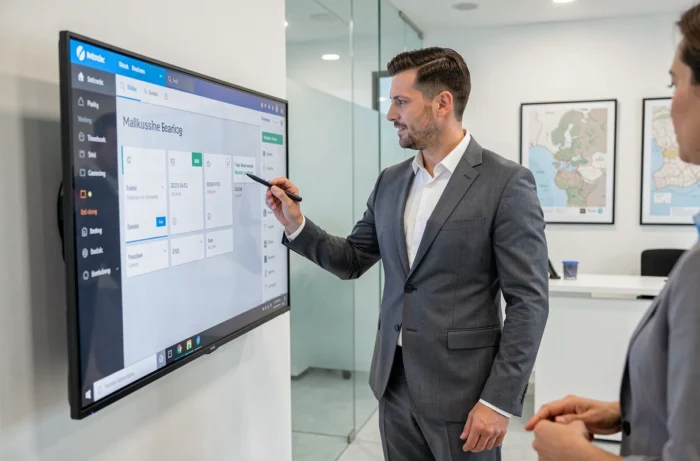
For a co-owner, accessing the property manager’s extranet allows them to consult accounts, general assembly minutes, and calls for funds without waiting for mail. Some platforms go further by offering a collaborative space where co-owners can vote or ask questions between two assemblies.
What the platform does not replace
A digital tool does not replace the human expertise of the property manager on technical arbitrations (facade renovation, elevator compliance, disputes). It accelerates the flow of information and reduces processing times, but the decision remains collective and requires a vote in assembly.
The real benefit of a condominium platform is traceability. Every exchange, every document, every vote is archived with a date. In case of a challenge to a decision made in assembly, this digital history constitutes a solid piece of evidence.
Whether managing a rental apartment, a sale, or a lot in a condominium, the common thread remains the same: reducing the number of intermediaries and different supports. A well-chosen platform does not eliminate the complexity of real estate processes, but it concentrates the flows in one place, which limits forgetfulness and time loss.