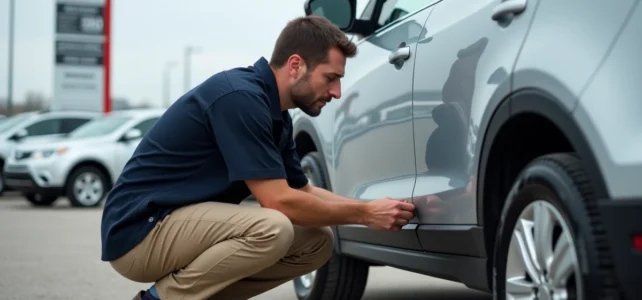
A used SUV for 15,000 euros that breaks down due to an automatic transmission failure three months after purchase can lead to a bill of 3,000 to 4,000 euros and a vehicle out of service for several weeks. This scenario is not exceptional. In the used car market, the supply of SUVs is massive, but actual reliability varies greatly from model to model.
Knowing where to look before signing makes all the difference between a smooth purchase and a financial pit.
Embedded electronics and invisible breakdowns in a used SUV
People often think of the engine and transmission when discussing reliability. For recent SUVs, electronic failures can sometimes be more expensive than mechanical issues. A frozen touchscreen, a faulty rearview camera, an electric tailgate that no longer responds, and malfunctioning driving assistance sensors: these defects are not visible during a standard technical inspection.
During the test drive, we systematically check each function. We connect our phone via Bluetooth, activate the adaptive cruise control, and open and close the electric tailgate several times. A multimedia system that lags or restarts on the move indicates a motherboard issue, and replacement can quickly cost hundreds of euros.
Driving assistance systems (emergency automatic braking, lane departure warning) rely on sensors calibrated at the factory. After a front impact, even minor and repaired, recalibration may not have been performed. We ask for the repair invoice and check that the radar or camera calibration is included. To better understand how to choose a reliable used SUV, this electronic aspect deserves as much attention as the condition of the engine.

Hybrid or thermal engine: what really changes in the used market
The used market is full of diesel SUVs, but ZFE restrictions reduce their appeal for regular urban use. Since the tightening of low-emission zones in major French cities in 2024-2025, a Crit’Air 3 or older diesel may be banned from circulation during the week in several metropolitan areas. Before buying, we check the Crit’Air sticker of the targeted model and cross-reference it with its daily usage location.
Used hybrid SUVs: specific checks
Toyota hybrid SUVs (RAV4, Yaris Cross) or Hyundai Tucson are arriving in large numbers on the second-hand market. Their mechanical reliability is generally solid, but purchasing a used hybrid requires additional checks.
- The SOH (State of Health) of the high-voltage battery indicates its residual capacity compared to new condition. We request a diagnostic from a specialist or dealership to obtain this figure before purchase.
- The charging and usage history matters: a plug-in hybrid used exclusively in thermal mode will have a degraded battery due to lack of cycles, while a conventional hybrid (non-plug-in) manages its cycles automatically.
- Tire wear is often accelerated on a hybrid SUV due to the vehicle’s higher weight. We check the wear on all four tires and budget for a quick replacement if necessary.
Gasoline or diesel: the case of high-mileage drivers
For someone who drives a lot on the highway and lives outside ZFE, a recent diesel SUV (Crit’Air 2) remains relevant. The Peugeot 3008 BlueHDi or the Dacia Duster diesel are reliable choices in this segment. However, for mixed city-highway use, a conventional hybrid like Toyota consumes less in urban cycles and faces no traffic restrictions.
Availability of parts and actual maintenance costs of an SUV
A model may have an excellent reputation for reliability but can pose problems in the used market if its parts are rare or expensive. This is a criterion that “top 10” rankings rarely address.
Dual-clutch automatic transmissions (DSG at Volkswagen, EDC at Renault) are the most expensive components to replace. On a Volkswagen Tiguan or a Renault Kadjar equipped with this type of transmission, we test the gearbox on a varied course: hill starts, slow maneuvers in parking lots, and brisk accelerations. Any sudden vibration or hesitation when shifting gears is a warning sign.
Pollution control systems (particulate filter, EGR valve, AdBlue system on diesels) also incur heavy costs. Feedback on this point varies depending on usage conditions: a diesel that primarily drives in the city will clog its DPF much faster than a vehicle that regularly undertakes long highway trips.
Test drive and documents: the checklist before signing
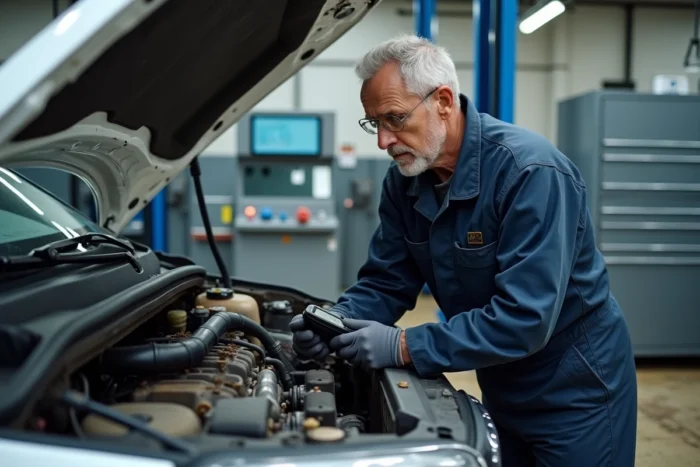
The test drive is not limited to a lap around the block. We plan a route of at least twenty minutes that mixes city, highway, and, if possible, a rough road to test the suspensions and listen for body noises.
- Cold start: we arrive before the seller has turned on the ignition. An engine that rattles or smokes when cold reveals problems that ten minutes of warming up can mask.
- Firm braking on an open road: the vehicle must remain stable, without pulling to one side. Discs and pads on an SUV wear out faster due to weight.
- Testing all electrical controls from the driver’s seat: windows, mirrors, heated seats, sunroof. Each malfunctioning function is a negotiation lever.
- Checking all four tires: brand, wear, date of manufacture (DOT code). Mismatched or low-quality tires on an SUV suggest neglected maintenance.
Documents to request
The stamped maintenance booklet remains the best indicator of follow-up. We check that the oil change and filter replacement intervals have been respected. The report from the last technical inspection provides information on corrosion points, pollution levels, and the condition of the running gear.
A Histovec history (free, provided by the Ministry of the Interior) confirms the mileage, the date of first registration, and the absence of opposition. If the seller refuses to provide this document, it is a sufficient reason to walk away.
The used SUV market offers a considerable choice, from accessible Dacia Dusters to sought-after Toyota RAV4 hybrids. The difference between a good deal and a bad purchase rarely hinges on the displayed price.
It hinges on a battery diagnostic requested before the sale, on an automatic transmission tested on a hill, on a verified Histovec history in five minutes. The most reliable used SUVs are not necessarily the most expensive, but those whose past is precisely known.