
A white hat reflects light, while a black hat absorbs it. This basic principle of physics guides most of the advice found online. However, reducing sun protection to just the color of the fabric overlooks what really matters: the hat’s ability to filter ultraviolet rays before they reach your skin.
Hat UPF Rating: The Criterion That Makes Color Secondary
Have you noticed that some hats sold in sporting goods stores display a UPF 50+ label? This rating measures the fraction of UV rays that the fabric allows to pass through. A hat certified UPF 50+ filters almost all ultraviolet rays, whether the fabric is white, black, or khaki.
It’s true that color influences UV absorption. A black fabric absorbs more radiation than a white one. However, as long as the weave is sufficiently dense and the textile incorporates UV treatments, the difference in filtration between a white hat and a black hat becomes marginal.
Before wondering which color to prefer, it’s better to check if the hat has a UPF certification. Without this indication, even a loosely woven black hat offers poor protection. With it, color becomes a matter of thermal comfort and style, not safety. Knowing how to choose the color of your hat therefore involves looking at the technical label before considering the shade.

Black Hat and Heat: UV Absorption vs. Thermal Comfort
Black absorbs more visible light and infrared than white. As a result, a black hat heats up more in the sun. In high temperatures, this accumulation of heat on the top of the head can become quite uncomfortable.
This is where so-called cooling technical fabrics come into play. Several outdoor brands today offer dark hats made from quick-drying materials, with mesh panels for ventilation. These models partially compensate for the heating associated with the dark color.
When Black Remains Relevant
While hiking at high altitudes or in cool winds, the heat captured by a black hat can be an advantage. The slight surplus of heat compensates for the ambient chill. Conversely, on a beach in the height of summer, a light-colored hat will be more pleasant to wear for several hours.
Black provides good UV protection but heats up more, while white reflects light and keeps the head cooler. It’s not a question of which is “better” in absolute terms; it’s a question of the context of use.
Brim Width and Weave: What Really Protects from the Sun
Color grabs attention, but two other parameters weigh more heavily in actual UV protection.
- Brim Width: A wide-brimmed hat covers the face, ears, and neck. These areas are most exposed to sunburn and long-term skin risks. A narrow brim, regardless of the hat’s color, leaves these areas vulnerable.
- Weave Density: Hold the hat up to a lamp. If light easily passes through the fabric, so do UV rays. A tight weave mechanically blocks a large portion of radiation, regardless of the shade.
- Fabric Material: Polyester and nylon generally filter UV rays better than untreated cotton or natural straw. Some straw hats remain effective, provided the weaving is sufficiently dense and regular.
A fine white cotton hat with short brims offers less protection than a dense black polyester hat with wide brims. The hierarchy of criteria is clear: wide brims, then dense weave, then UPF rating, then color.
White or Black Hat Depending on the Activity: Practical Guide
Rather than seeking a universal answer, the choice is made based on usage.
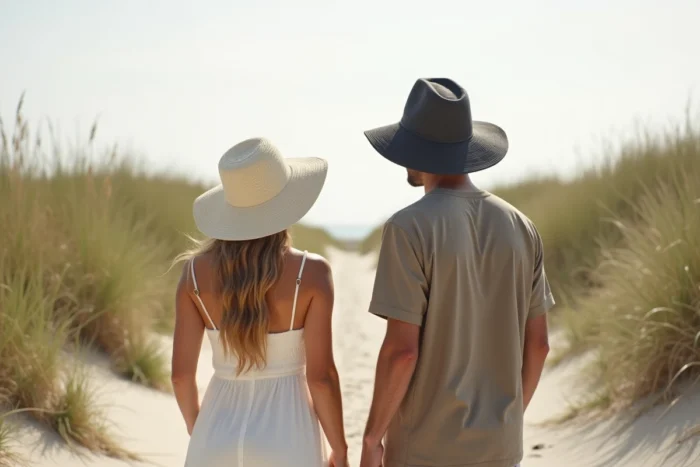
For a day at the beach or a market in full sun, a light-colored hat (white, beige, cream) with wide brims limits heating and remains comfortable over time. Thermal comfort takes precedence when staying exposed for long periods without moving.
For a mountain hike or a sports outing, a dark technical fabric hat with ventilation works very well. Physical activity already generates body heat, and quick-drying technical fabrics wick sweat away better than light cotton.
And Intermediate Colors?
Khaki, navy blue, or gray offer a good compromise. These shades absorb more UV than pure white while heating less than deep black. Medium colors combine decent filtration and acceptable thermal comfort.
For children, whose skin is more sensitive, a UPF 50+ certified wide-brimmed hat remains the top priority. Color takes a back seat.
- Beach, city, prolonged static exposure: prioritize a light-colored wide-brimmed hat
- Hiking, sports, altitude: a dark technical fabric hat with ventilation is more suitable
- Versatile daily use: a medium shade (dark beige, khaki, gray) with a good weave covers most situations
A well-constructed hat offers better protection than a well-colored hat. Checking the UPF rating, brim width, and fabric density before settling on a color allows for a truly protective choice. Both white and black have their advantages, but neither replaces a tight weave and brims that cover the neck and ears.